What this service covers
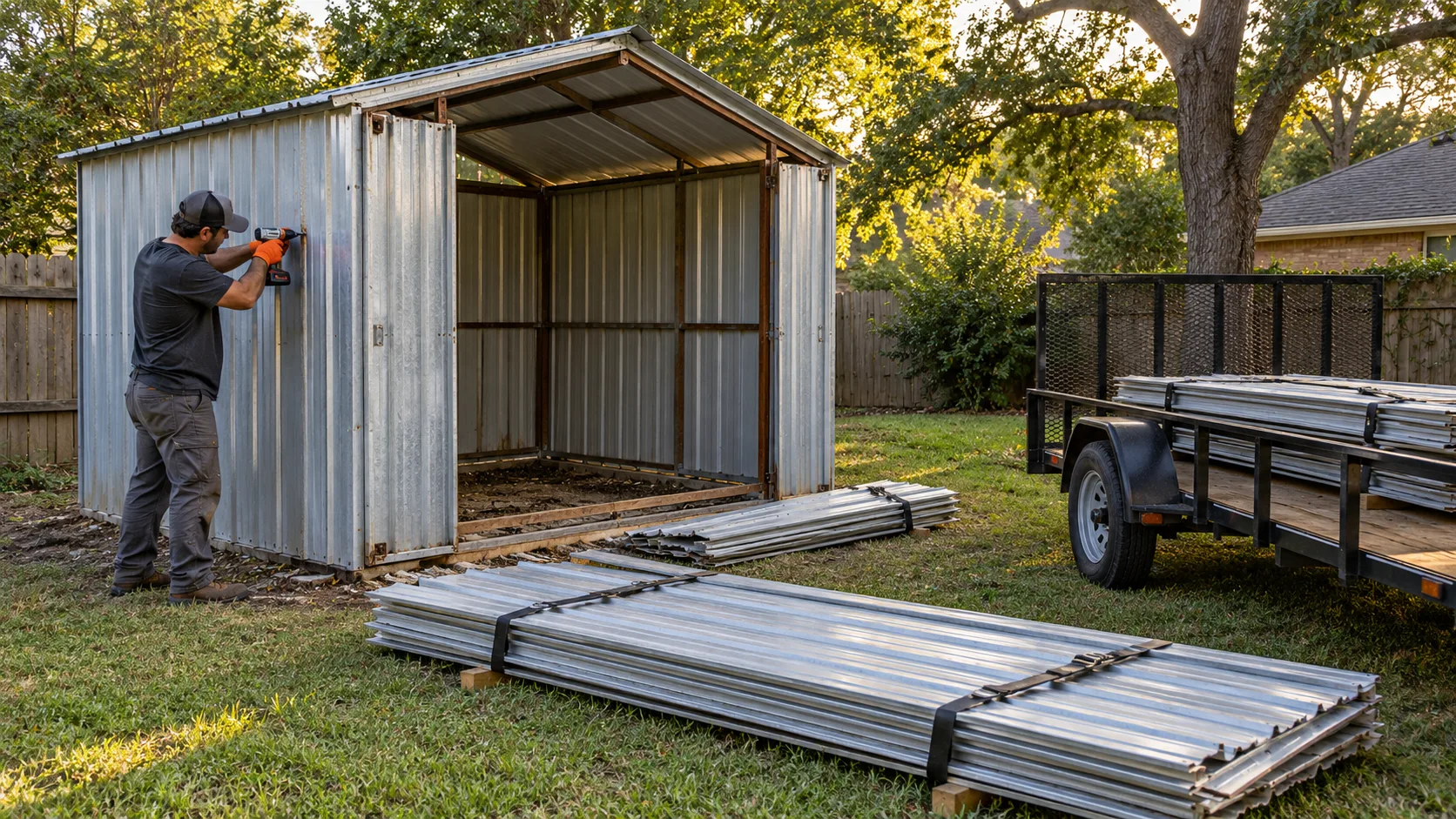
This page focuses on corrugated panels, light metal framing, and controlled loading. The job still begins with a review of the structure, property access, stored contents, visible utilities, attachments, and the base.
Common job situations
- The shed is weathered, leaning, or no longer useful.
- A new yard plan needs the footprint cleared.
- The structure cannot pass through the gate intact.
- Roofing, shelves, or mixed materials need to be separated.
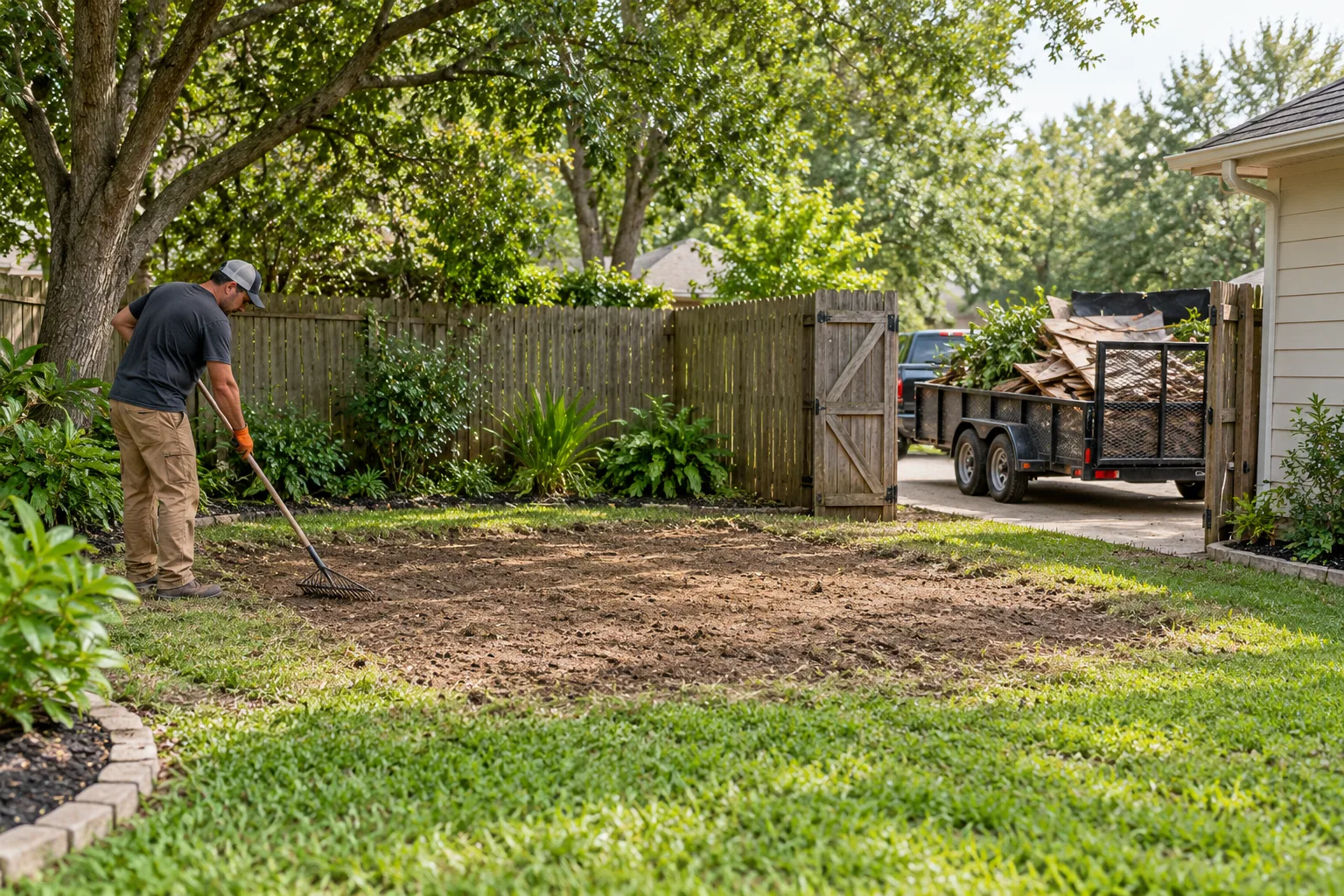
- Dismantled material needs a planned route to the loading area.
Before the work date
Empty loose contents unless a separate contents-removal scope is agreed. Point out wiring, plumbing, irrigation, fuel, paint, batteries, propane, chemicals, and anything attached to the shed. Move pets, vehicles, toys, hoses, and portable garden items away from the route.
What changes an estimate
Useful factors include length, width, height, material, condition, roof layers, base type, built-in shelving, attached structures, gate width, carry distance, slope, stairs, and the parking position. Concrete removal should be confirmed separately.
Send these photos
Photograph all four sides, the roof, interior, base, visible utility connections, narrowest gate, and the route to the street.
Questions to settle
Can a shed be removed in one piece?
Sometimes, but access, structure condition, weight, and transport make on-site dismantling the more practical plan for many backyard sheds.
What should not be left inside?
Identify liquids, fuel, paint, batteries, pesticides, propane cylinders, and unknown containers. Do not bury them in boxes or ordinary debris.
What happens to the base?
The agreed scope should say whether blocks, skids, anchors, pavers, or concrete are included. A slab is not automatically part of shed removal.