Describe the structure
Share size, material, condition, contents, attachments, and the base.
New Caney, Texas
Plan the teardown, carry path, and haul-away around the property you want to keep. Start with the structure, access, and base.
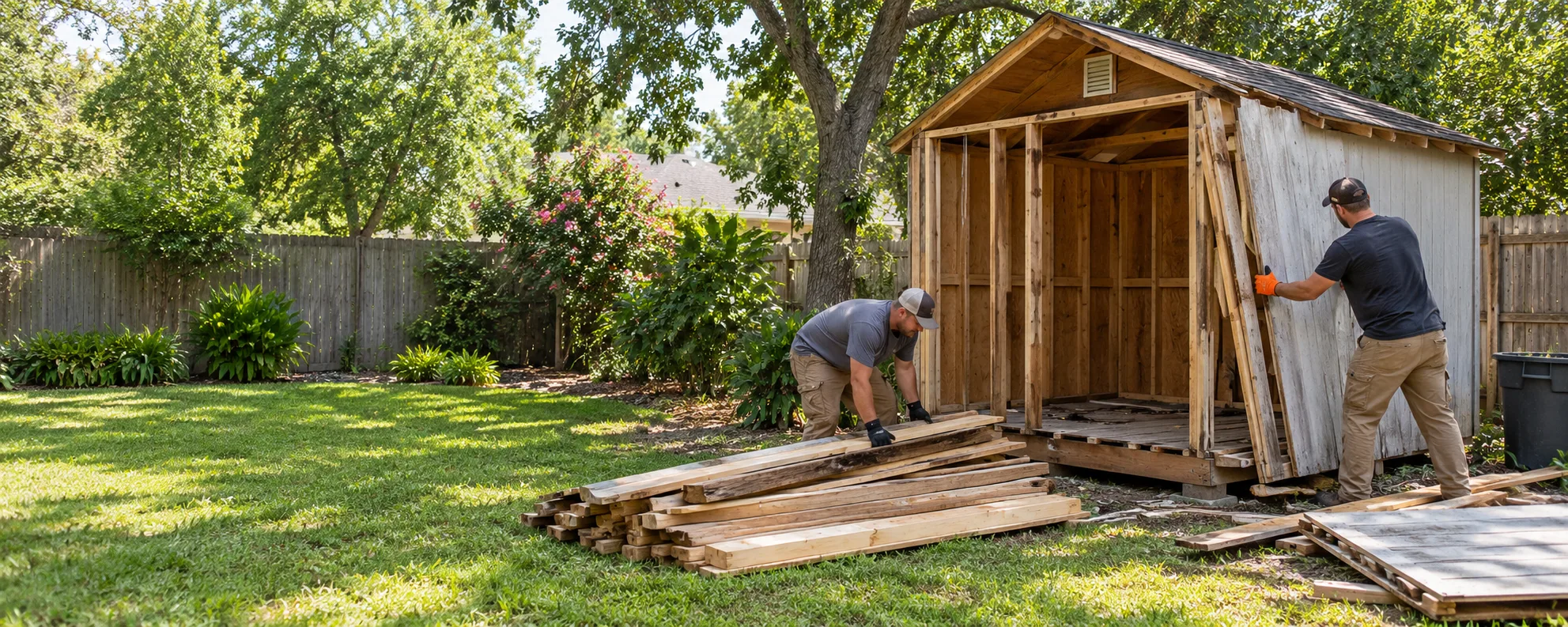 A practical path from standing shed to open yard
Roofing, shelves, stored items, anchors, utilities, and the base all affect the scope. The path out matters too. A small structure behind a narrow gate can need more dismantling than a larger shed beside a driveway.
See the full shed-removal scope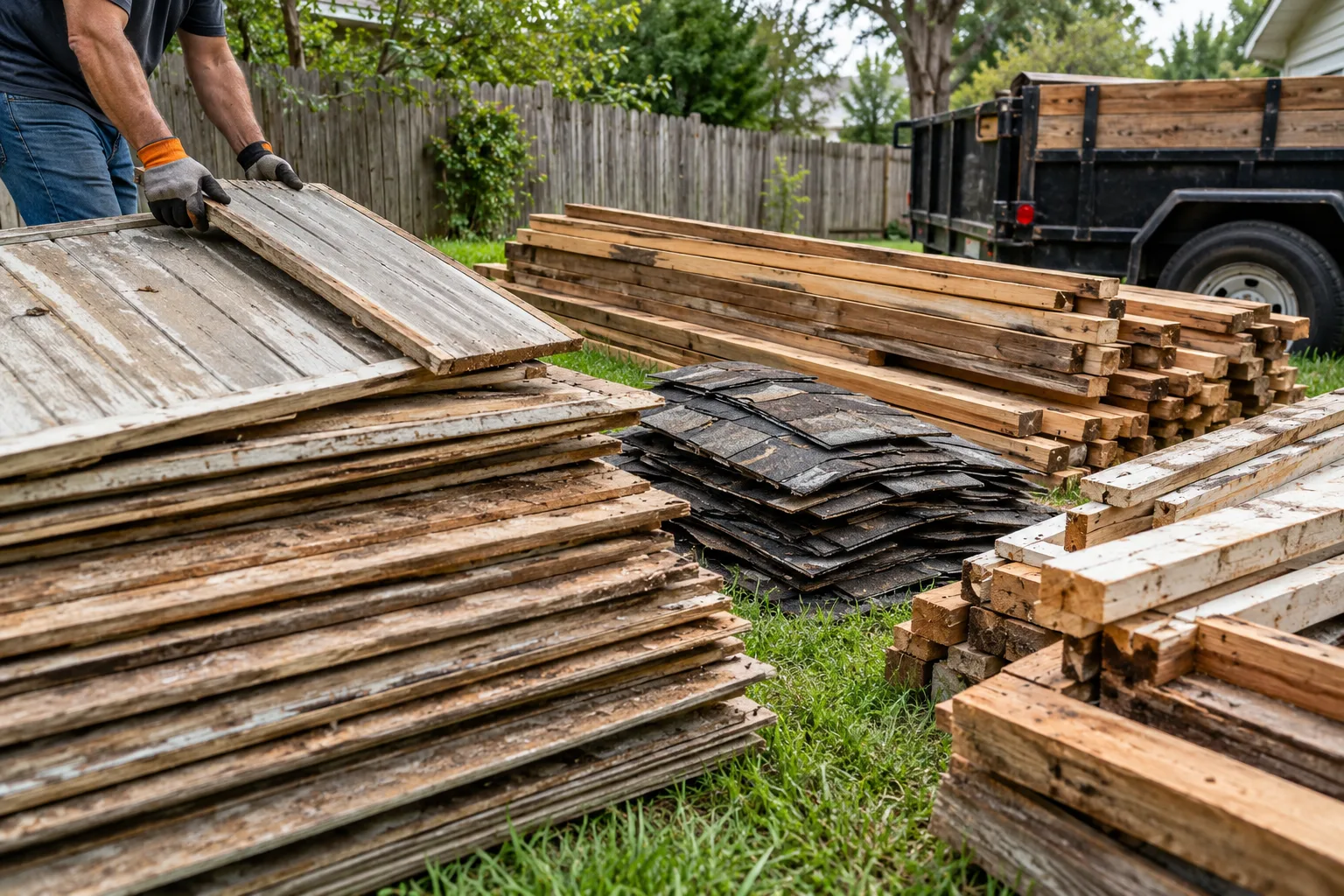
If the shed is still standing, start with removal or demolition. If it is already down, hauling may be the clearer fit.
Take down or carry out an unwanted shed, then haul the structure away.
Controlled dismantling for sheds that cannot leave the property intact.
Load and remove dismantled shed material from the property.
Clear the contents, plan access, and remove the storage structure.
Removal planned around fences, gates, trees, lawns, and tight side yards.
Dismantle framed, paneled, or shingled wood sheds and sort the debris.
Take down light-gauge metal panels and frames for safe loading.
The exact plan depends on the property and the condition of the shed.
Share size, material, condition, contents, attachments, and the base.
Measure the narrowest gate and note turns, steps, soft ground, and parking distance.
Sections are handled in a controlled order, then prepared for transport.
Loose shed material is gathered and the agreed area receives a final cleanup.
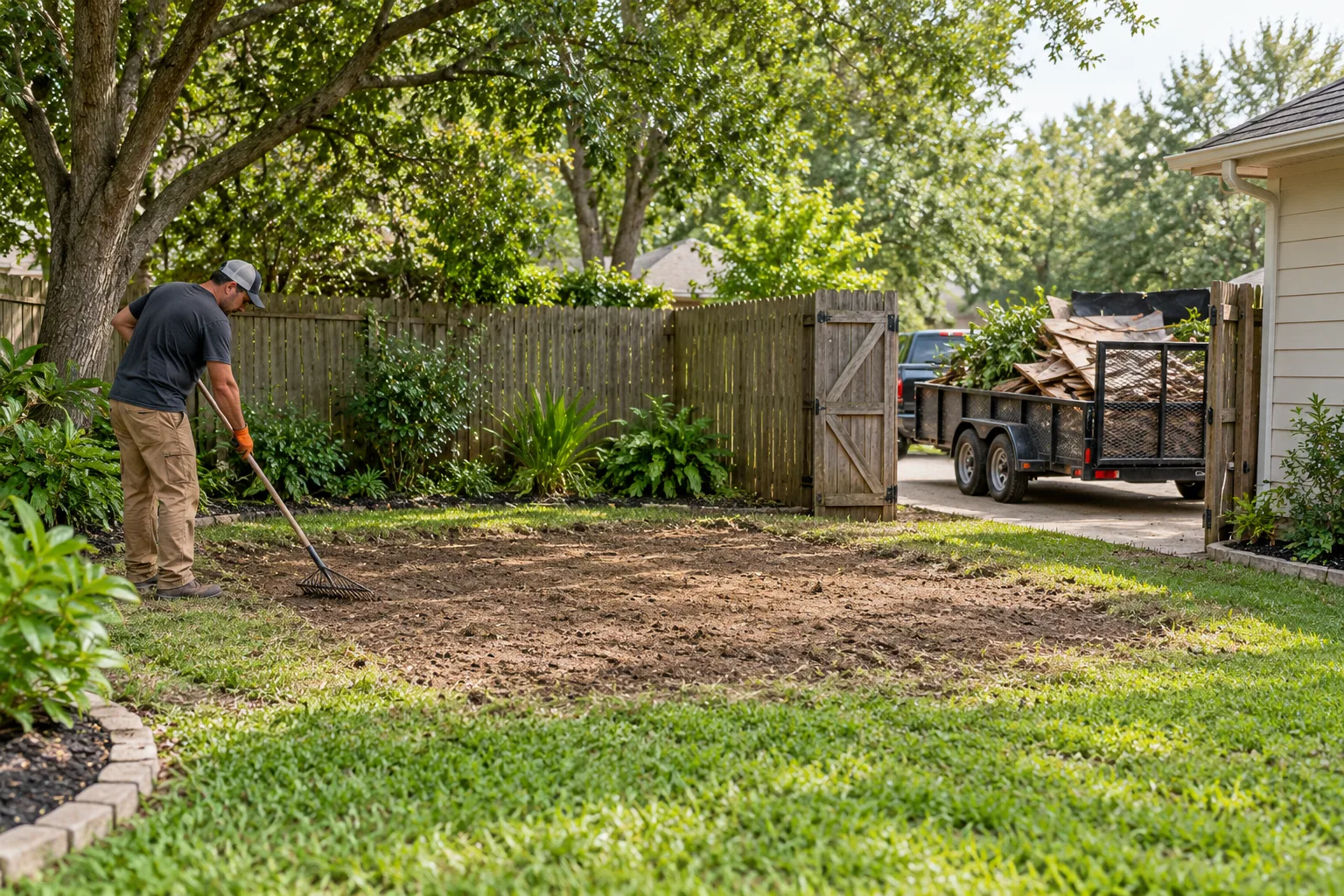
Size matters, but so do material, condition, roof layers, contents, base, access, carry distance, and disposal needs.
Build a useful estimate requestLoose contents should be removed or discussed separately. Unknown liquids, fuel, paint, batteries, propane, and chemicals need to be identified before the job.
Do not assume it is. Shed removal and concrete removal are different scopes. Identify the base and confirm what the estimate covers.
Send each side, the roof, interior, base, visible connections, and the path from the shed to the street.
Describe the shed, its condition, and the path to the street. Those details make the first conversation more useful.