What to Check Before a Shed Is Demolished
Back to Helpful GuidesA practical walk-around checklist for utilities, contents, access, attachments, and the shed base.
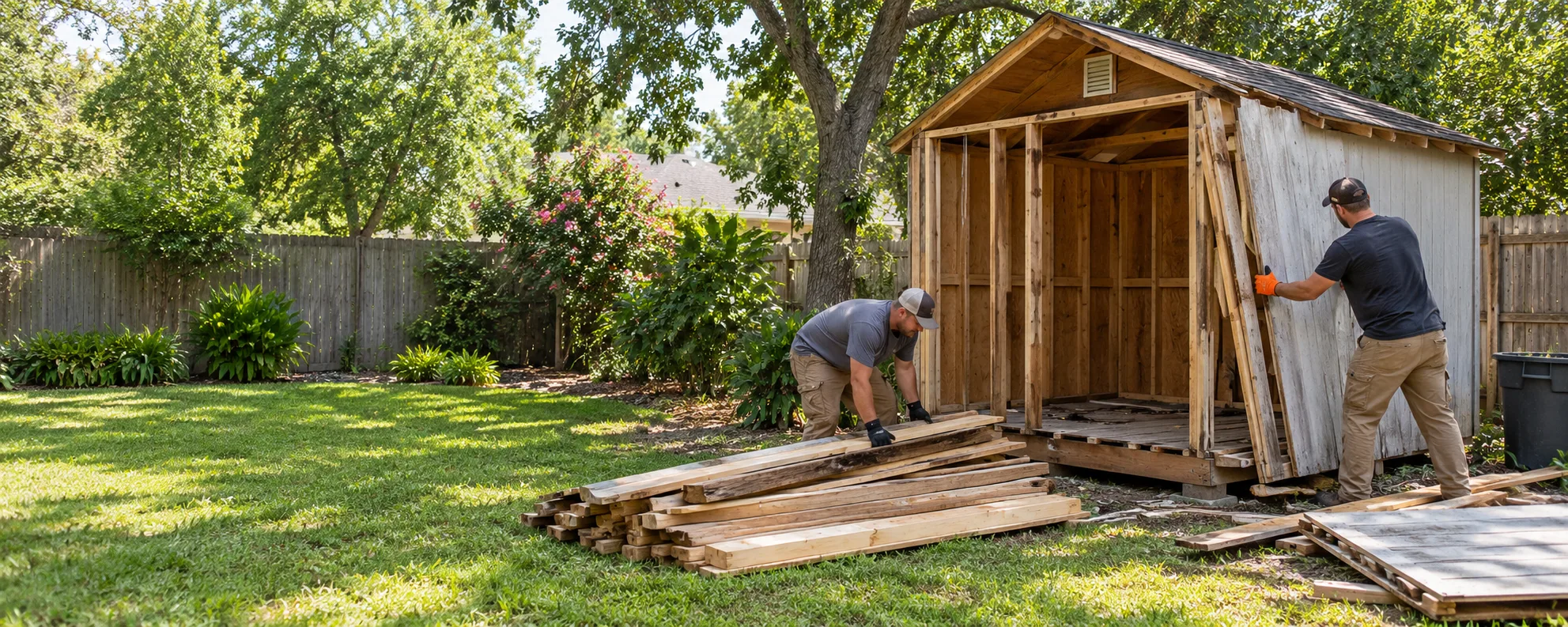
Start outside the shed and work inward. The useful questions are physical: what touches the structure, what runs into it, what is stored inside, and how the material can leave the yard.
A five-part walk-around
- Utilities: look for wiring, lights, outlets, water lines, hoses, or equipment connected to the building. Do not assume an unused shed is disconnected.
- Attachments: note lean-tos, shelves fixed through walls, ramps, gutters, trellises, and fencing tied into the shed.
- Contents: remove loose items. Flag paint, fuel, batteries, pesticides, propane cylinders, and other materials that need separate handling.
- Access: measure the narrowest gate and note tight turns, steps, slopes, soft ground, and overhead branches.
- Base: identify whether the shed sits on blocks, skids, pavers, a wood floor, or a concrete slab.
Information to send with an estimate request
Share the shed’s approximate length and width, construction material, condition, base type, access photos, and whether the contents are already out. Mention visible utility connections before anyone starts work.
When to stop and get an assessment
Do not disturb suspected asbestos-containing material, unknown wiring, unstable framing, chemical containers, or a structure leaning toward a fence or occupied building. Describe the condition and ask what needs specialist review.
Discuss the job
If you want help with shed demolition, send the structure and access details in your email.
See Shed Demolition